

The Halight Current: A Modern Learning & Development Strategy Framework
Organizations invest billions of dollars in employee training every year, yet learning programs frequently fail to deliver meaningful outcomes.
The challenges are persistent:
- Employees complete courses but struggle to retain and apply what they learned.
- Managers find it difficult to connect training investments with actual performance improvements.
- Leaders question whether learning initiatives genuinely impact business results.
This is what we call the L&D Energy Crisis.
The Halight Current solves this problem. It is a comprehensive learning and development strategy framework designed to transform training from isolated programs into a connected system that energizes people, strengthens skills, and drives measurable performance.
Rather than treating learning as a one-time event, the Halight Current creates a continuous flow of engagement, practice, feedback, and improvement.
This guide introduces the full framework and connects each phase of the Halight Current journey.

The L&D Energy Crisis: Why Traditional Training Falls Short
Traditional corporate training strategies often prioritize content delivery over performance outcomes.
The typical approach follows a predictable pattern:
Build courses, assign modules, track completion rates, and move on to the next topic.
But completion alone does not create capability.
Without meaningful engagement, deliberate practice, and structured feedback, training becomes an administrative checkbox rather than a driver of organizational growth.

The Halight Current addresses this challenge by focusing on five interconnected elements:
Strategic alignment
Ensuring learning supports real business priorities
Engaging experiences
Creating content that resonates and sticks
Intrinsic motivation
Activating genuine learner participation
Practical application
Converting knowledge into workplace action
Continuous improvement
Using data to refine and optimize programs
Together these elements form a powerful learning engagement framework that strengthens both individual development and organizational performance.
The Five Phases of the Halight Current Framework
The Halight Current operates as an interconnected system where each phase strengthens the next, creating continuous learning momentum.
This is not a linear checklist. Each phase supports and amplifies the others, building a self-reinforcing cycle of development and improvement.

Align: Building Strategic Learning Foundations
The Challenge:
Many learning programs are developed without clear connection to organizational priorities or measurable business outcomes.
The Solution:
Align ensures that your corporate training strategy directly supports the capabilities your teams need to drive results.
Key Outcomes:
✔ Clear learning objectives tied directly to business goals
✔ Defined success metrics established before program launch
✔ Stakeholder alignment on priorities and expectations
When organizations begin with alignment, they create clarity about goals, audience needs, and expected outcomes from the start.

Fuel: Designing Learning Experiences That Drive Engagement
The Challenge:
Generic, one-size-fits-all content leads to disengagement and low completion rates.
The Solution:
Fuel focuses on high-impact learning content design using proven engagement principles.
Essential Elements:

Relevance
Content matched to real workplace challenges

Variety
Multi-format delivery including video, interactive modules, and micro-learning

Storytelling
Narrative-driven instruction that makes concepts memorable

Actionability
Immediate takeaways learners can apply in their work
When these elements are present, learners engage naturally and retain knowledge more effectively.
Read the full guide: Fuel: The Foundation That Makes or Breaks Your Learning Strategy

Ignite: Activating Intrinsic Motivation
The Challenge:
Mandatory training creates compliance, not genuine commitment to learning.
The Solution:
Ignite introduces the RAMP framework, which activates intrinsic motivation in learning and development.
The RAMP Framework includes:
Rewards
Recognition that reinforces progress and achievement
Achievement
Meaningful milestones that build momentum
Missions
Purpose-driven learning goals that create meaning
Progression
Clear pathways showing growth and development
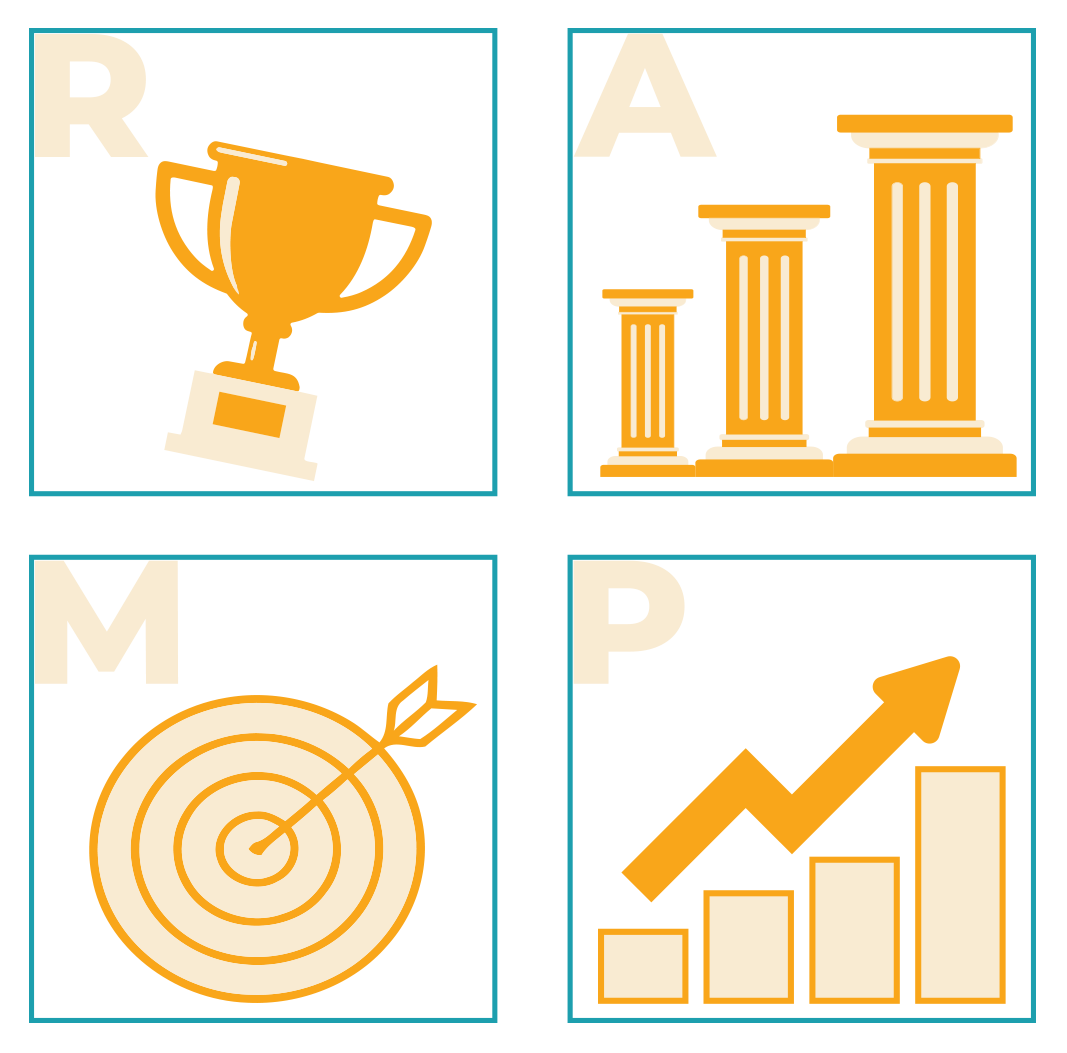
These elements transform learning from a mandatory task into an experience that learners actively want to participate in.
Read the full guide: Ignite: The RAMP Framework for Intrinsic Motivation

Empower: Converting Knowledge Into Performance
The Challenge:
Training knowledge is quickly lost without reinforcement and opportunities for practical application.
The Solution:
Empower focuses on learner empowerment, creating environments where individuals can practice skills, receive feedback, and develop genuine confidence.
Core Components:
✔ Safe practice environments – Low-risk spaces to test and refine new skills
✔ Continuous feedback loops – Real-time coaching and correction
✔ Learner ownership – Self-directed application opportunities
✔ Real-world skill application – Structured integration into daily work
This phase ensures that knowledge becomes sustainable behavior change rather than temporarily memorized information.

Amplify: Sustaining and Scaling Learning Impact
The Challenge:
Learning systems must evolve as organizations grow, change, and face new challenges.
The Solution:
Amplify provides a continuous improvement loop that proves and improves training effectiveness over time.

The Amplify Process:
✔ Measure – Track engagement, application, and business impact metrics
✔ Analyze – Identify what works and what needs refinement
✔ Refine – Optimize programs based on data-driven insights
✔ Scale – Expand successful initiatives strategically across the organization
This ensures that learning strategies remain effective and relevant as your organization evolves.
How the Halight Current Creates Continuous Learning Flow
The Halight Current is not a one-time implementation. It creates an ongoing system where each phase reinforces the others.
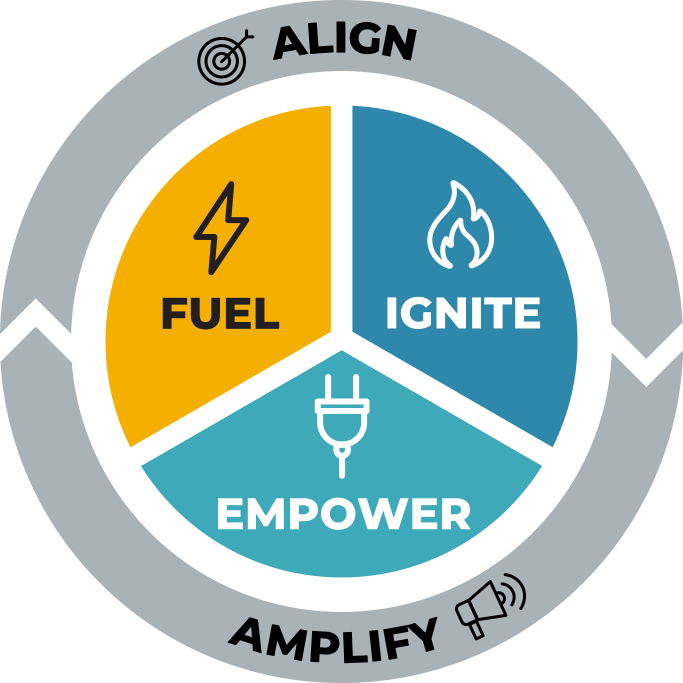
Align
Defines strategic direction and establishes clear goals.
Fuel
Builds compelling learning experiences that engage participants.
Ignite
Activates genuine learner motivation and participation.
Empower
Enables skill application and builds workplace confidence.
Amplify
Sustains progress and scales what works.
This creates a self-reinforcing cycle of learning transformation that continuously strengthens organizational capability and adaptability.
Why the Halight Current Framework Matters
Organizations that strengthen their learning systems through the Halight Current approach see meaningful improvements across multiple dimensions.
Enhanced employee engagement with learning programs and initiatives.
Accelerated skill development and workplace application.
Improved team performance and collaboration.
Greater organizational adaptability in changing markets.
Learning becomes more than training. It becomes a strategic capability that supports long-term growth and competitive advantage.
The Halight Current helps organizations create learning environments where people develop continuously and apply new skills confidently in their daily work.
Start Your Learning Transformation Journey

Transforming learning does not require redesigning every program immediately or overhauling your entire approach overnight.
It begins with understanding how the elements of strategy, engagement, practice, and measurement work together to create sustainable impact.
You can start with one phase based on your most pressing challenge:
Struggling with low engagement? Begin with Ignite to activate motivation.
Need better strategic alignment? Start with Align to clarify goals and priorities.
Want to prove program effectiveness? Focus on Amplify to measure and demonstrate ROI.
The Halight Current provides a clear, proven pathway to transform your corporate training strategy and build learning ecosystems that energize people and drive measurable business results.
Explore the articles in this guide to begin strengthening your learning and development approach.

Ready to strengthen your learning strategy?
Explore the complete Halight Current series to dive deeper into each phase of the framework.
Connect with our team to discuss how the framework can be customized and applied to support your organization's specific learning challenges and goals.
The Complete Halight Current Series: Your Learning Transformation Roadmap

This guide connects the full 10-part series exploring each phase of the framework in depth.
Foundation Articles:
● The L&D Energy Crisis: Why Traditional Training Is Failing Your People
● From Training to Transformation: Introducing the Halight Current
The Five-Phase Framework:
● Align: Rebuilding Learning Strategy for Real Impact
● Meet Your Learning Champions: Who Really Drives L&D Success?
● Fuel: The Foundation That Makes or Breaks Your Learning Strategy
● Ignite: The RAMP Framework for Intrinsic Motivation
● Empower: Turning Knowledge Into Sustainable Action
● Amplify: The Secret to Learning That Lasts
Implementation Guides:
● Putting the Halight Current Into Action: Your 90-Day Implementation Roadmap
● Overcoming the Five Most Common Learning Transformation Challenges
Each article provides actionable frameworks and practical strategies to strengthen your corporate training approach and build learning systems that deliver real results.
Frequently Asked Questions About Learning and Development Strategy
What is a learning and development strategy?
A learning and development strategy is a structured plan that organizations use to build employee capabilities, improve performance, and achieve business objectives through targeted training and development programs.
Effective L&D strategies go beyond course catalogs. They create clear connections between learning initiatives and measurable business outcomes including productivity gains, innovation, leadership pipeline development, and customer satisfaction.
Modern learning and development strategies prioritize three core elements: employee engagement with content, practical skill application in real work contexts, and continuous improvement based on performance data.
Why do traditional corporate training programs fail?
Traditional corporate training programs often fail because they prioritize content delivery over behavior change and performance outcomes.
The most common failure points include:
Misalignment between training content and actual business priorities
Low employee engagement due to irrelevant or generic content
Insufficient opportunities for hands-on practice and skill reinforcement
Measurement limited to completion rates rather than performance impact
Without strategic alignment, active engagement, and practical application opportunities, training programs become compliance checkboxes rather than performance drivers that improve business results.
What is the Halight Current framework?
The Halight Current is a comprehensive learning and development framework that transforms traditional training into an integrated system designed to drive employee engagement, skill mastery, and measurable business performance.
The framework consists of five interconnected phases:
- Align – Establish strategic alignment between learning initiatives and business goals
- Fuel – Design compelling, relevant learning experiences that drive participation
- Ignite – Activate intrinsic motivation through the RAMP framework
- Empower – Enable skill application through practice, feedback, and real-world application
- Amplify – Measure learning impact and optimize programs through data-driven insights
These phases work together to create a continuous cycle of learning engagement and performance improvement rather than one-time training events.
How can organizations improve employee training engagement?
Improving employee training engagement requires moving beyond mandatory course assignments to create meaningful learning experiences that employees value.
High-performing organizations boost engagement by:
- Connecting training content directly to employees' current work challenges and career goals
- Designing interactive, varied learning experiences rather than lecture-based modules
- Providing structured opportunities to practice new skills in safe environments
- Facilitating peer learning, collaboration, and knowledge sharing
- Recognizing and celebrating learning progress and skill development milestones
When employees see clear relevance between training and their success, engagement increases organically and completion rates improve.
What is the RAMP framework for learning and development?
The RAMP framework is a motivation-based model designed to increase learner engagement and participation in corporate training programs by activating intrinsic motivation rather than relying on compliance.
RAMP Framework Components:
- Rewards – Provide meaningful recognition for progress and achievement, not just completion
- Achievement – Create challenging milestones that build confidence and competence
- Missions – Frame learning around purposeful, mission-driven goals that create meaning
- Progression – Visualize skill development pathways that show learners their growth journey
Organizations that implement the RAMP framework successfully transform passive training participants into active, self-directed learners who engage with development opportunities because they find them valuable, not because they're required.
What is learning transformation?
Learning transformation is the strategic process of evolving traditional, event-based training programs into dynamic learning ecosystems that support continuous employee development and organizational agility.
Key characteristics of learning transformation include:
- Strategic alignment of learning programs with business strategy and workforce needs
- Shift from passive content consumption to engaging, interactive learning experiences
- Emphasis on practical skill application in real work contexts, not just knowledge retention
- Implementation of continuous measurement systems that track performance impact
- Integration of learning into daily workflow rather than separate training events
Organizations that successfully complete learning transformation initiatives build more capable teams, respond faster to market changes, and create stronger competitive advantages through workforce development.
How do you measure learning and development success?
Measuring learning and development success requires a comprehensive approach that evaluates impact at multiple levels beyond simple course completion tracking.
Effective L&D measurement includes:
- Engagement metrics – Participation rates, time invested, and learner satisfaction scores
- Knowledge acquisition – Assessment results and skill proficiency demonstrations
- Behavior change – Observable application of new skills in workplace settings
- Performance outcomes – Individual and team productivity improvements
- Business impact – ROI calculations connecting learning investments to revenue, efficiency, or customer outcomes
Modern frameworks like the Halight Current emphasize continuous measurement and data-driven iteration to ensure learning programs deliver sustained value and remain aligned with evolving business needs.
What makes a learning engagement framework effective?
An effective learning engagement framework creates sustained participation and measurable skill development by addressing the complete learning journey from strategy to application.
Essential components of successful frameworks include:
- Strategic foundation – Clear alignment between learning objectives and organizational goals
- Engaging design – Content and experiences that capture attention and maintain interest
- Intrinsic motivation – Elements that activate genuine learner interest rather than forcing compliance
- Application support – Structured opportunities for practice, feedback, and skill refinement
- Continuous improvement – Data collection and analysis systems that drive ongoing optimization
When these elements work together as an integrated system rather than isolated components, learning becomes a continuous performance improvement engine that strengthens organizational capability over time.
How is learning and development different from training?
Training typically refers to teaching specific skills or knowledge for immediate job performance, while learning and development encompasses a broader, more strategic approach to building organizational capability over time.
Training focuses on short-term skill acquisition. Learning and development includes training but also emphasizes career growth, leadership development, organizational culture, and continuous improvement systems.
Effective L&D strategies integrate training as one component within a comprehensive framework that supports both individual employee growth and long-term business objectives.