
Don't Make This Mistake in Your Product Launch Strategy
Executive Summary
The biggest mistake in retail product launch strategy is treating launch training like a deadline.
The content is approved. The modules are published. The announcement goes out. The launch box gets checked.
But information delivered is not the same as readiness created.
A successful product launch requires more than giving retail associates access to product details. Brands must help them understand the product, remember what matters, explain its value and confidently use that knowledge during real customer conversations.
During the holiday season, when stores are busier, teams are changing and attention is stretched thin, that difference can determine whether a new product gains momentum or disappears into the noise.
Product Launches Are Not One-Day Events
Inside headquarters, launch day often feels like the finish line. On the sales floor, it is only the beginning.
Retail associates may be introduced to several new products within the same week. At the same time, they are managing promotions, inventory questions, changing schedules and a steady stream of customers who have already done their own research.
A product overview delivered two weeks before launch can quickly become distant knowledge. We explore why this gap opens in the first place in our previous post on retail product launch execution.
That is especially true during the holiday ramp-up, when seasonal employees are still learning, experienced associates are balancing competing priorities and every brand is fighting for attention.
The mistake is not that brands failed to provide training. It is that they expected one training moment to carry the entire launch.
The Real Goal Is Readiness, Not Content Delivery
Launch training is often measured by what the brand distributed:
- Was the product module published?
- Did associates receive the announcement?
- How many people opened or completed the training?
- Were all launch materials delivered on time?
Those questions matter operationally, but they do not reveal whether an associate can confidently support the product.
The better questions are:
- Can associates explain what makes the product different?
- Do they know which customer needs it solves?
- Can they compare it with another option without relying on a script?
- Are they confident answering the questions customers are most likely to ask?
- Where is knowledge breaking down by market, retailer or location?
Completion may show that training was accessed. Readiness shows whether the launch has a real chance of succeeding at retail. See how retail sales enablement strategies close the gap between training completion and frontline performance.
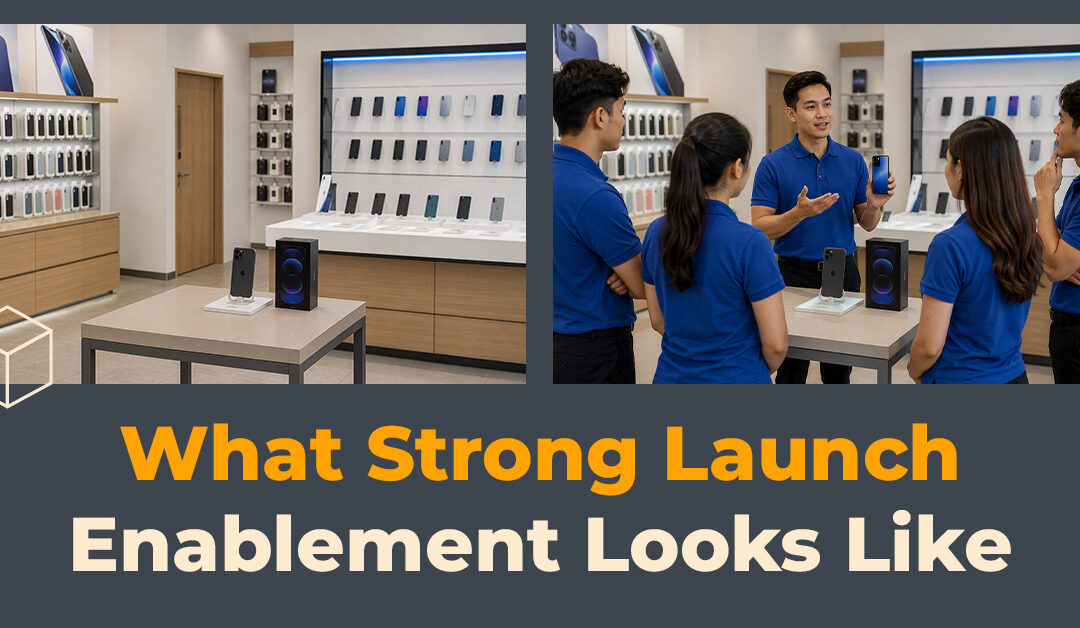
What Strong Launch Enablement Looks Like
Brands do not necessarily need more launch content. They need a better system for delivering, reinforcing and measuring the information that matters most.
That starts by identifying the few behaviors associates must demonstrate to support the launch. Instead of asking them to memorize every feature, focus on the knowledge they need to guide a real buying decision.
Then reinforce that knowledge over time.
A practical launch enablement strategy might include:
- A concise introduction before the product arrives
- Role-specific learning focused on customer needs
- Short reinforcement activities during the first weeks of launch
- Practice applying the message to realistic conversations
- Targeted support for the topics associates find difficult
- Ongoing visibility into confidence, knowledge and participation
This is where the Halight Framework becomes especially valuable. It connects learning, engagement and performance so brands can move beyond simply publishing launch content and begin building measurable frontline readiness.
Questions Leaders Should Ask Before the Holiday Rush
Before the next major product launch, ask:
- What must an associate be able to explain or do—not simply know?
- How will we reinforce the message after the initial training?
- Can we see where confidence or knowledge is weak before sales results arrive?
- Are seasonal and newly hired associates included in the readiness strategy?
- What happens when the launch message changes after materials are published?
- Are we measuring activity, or are we measuring the ability to perform?
If the answer to the last question is activity, there is likely a gap between the launch plan and the customer experience.
One Action This Week
Choose one upcoming holiday product launch and review its enablement plan from the associate’s perspective.
Remove anything that is useful only to the people who created the product. Prioritize what an associate needs to start a conversation, understand the customer, explain the value and confidently recommend the right solution.
Then identify how that knowledge will be reinforced after launch day.
That exercise will quickly reveal whether your strategy is designed to distribute information or create readiness.
The Halight Perspective
The strongest product launches do not depend on a single module, announcement or moment of attention.
They create a connected readiness cycle: introduce the product, build understanding, provide opportunities to practice, reinforce the message and measure what is happening across the frontline.
This matters throughout the year, but holiday launch season leaves very little room for delay. By the time traditional sales reports show that execution is slipping, valuable weeks may already be gone.
The brands that win will be the ones that can see readiness gaps early and respond while there is still time to influence the outcome.
Continue the Conversation
Is your holiday launch strategy built for readiness — or just completion?
Most brands find out the answer too late, after selling time is already gone.
Book a free retail launch readiness review with the Halight team. We will help you identify where your next product launch could be stronger and what to do before the holiday rush begins.