
Most sales associates can tell within seconds whether a training module will help them or disappear from memory the moment it ends. That quick judgment matters because if the content doesn’t feel relevant, practical, or connected to the brand they represent, it won’t influence what happens on the sales floor.
Off-the-shelf programs rarely meet that standard. Custom content does. And that difference is exactly what determines whether training informs or converts.
What is Custom Training?
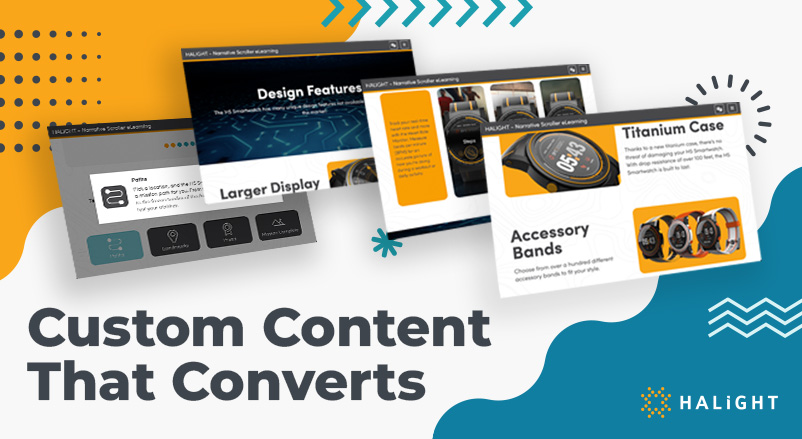
Custom training is designed specifically for a brand’s products, voice, environment, and performance goals. It improves sales readiness by offering relevant scenarios, interactive elements, and brand-aligned experiences that generic training cannot deliver.
1. Personalization Powers Engagement
Relevance is the biggest driver of engagement. When training reflects the environment learners work in, it becomes easier to absorb and apply.
Here’s how personalized learning supports better sales performance:
- Real-world examples grounded in the brand make content feel instantly familiar
- Language and tone that align with the brand help the material flow naturally
- Product-specific scenarios ensure learners understand exactly what they’ll need to know on the floor
This alignment gives learners context, so they don’t have to work as hard to connect the dots, which means they retain more and understand faster.
2. Timely Doesn’t Mean “Generic”
Off-the-shelf training is often chosen because it’s easy to deploy. But speed shouldn’t come at the expense of relevance. Training must be timely, yes — but it must also reflect current product knowledge, current customer expectations, and current brand standards.
We solve this tension by designing systems that keep production moving efficiently without flattening the content. Much of that speed comes from structure, not shortcuts:
- Flexible content models allow teams to quickly plug in brand-specific information
- Creative and instructional teams working in tandem reduce back-and-forth
- Clear review cycles and standards keep projects aligned from the beginning
The result is training that arrives when you need it and reflects what you stand for.
3. Gamified Learning Strengthens Skill Through Practice
Even the strongest content needs practice to take hold. That’s where interactive and gamified elements elevate the learning experience. They turn information into usable skills rather than passive awareness.
Our gamified experiences do this by offering:
- Risk-free simulations that present real decisions, giving learners the chance to experiment
- Challenges that reinforce key product knowledge in a memorable way
- Scenarios that spotlight customer needs, not just product features
- Small, consistent checkpoints that let learners see their progress
These interactive elements are designed to give learners room to think, respond, adjust, and try again. As they do, they gain a level of ease and assurance they can carry straight into customer-facing moments.
Why it’s More Effective
Custom learning succeeds because it respects the uniqueness of each brand and the reality of each learner. It prioritizes:
- Specificity: Content speaks directly to the products, customers, and environment.
- Engagement: Interactions and scenarios feel relevant, not abstract.
- Practicality: Learners see how each lesson applies immediately.
And when training supports actual behavior — not just awareness — it naturally contributes to stronger performance.
Let Your Training Reflect the Strength of Your Brand
Let’s build training that matches your brand’s standards and connects with your people. Reach out to us to create custom learning experiences designed to engage your teams and support measurable sales performance.